

What CBAM is
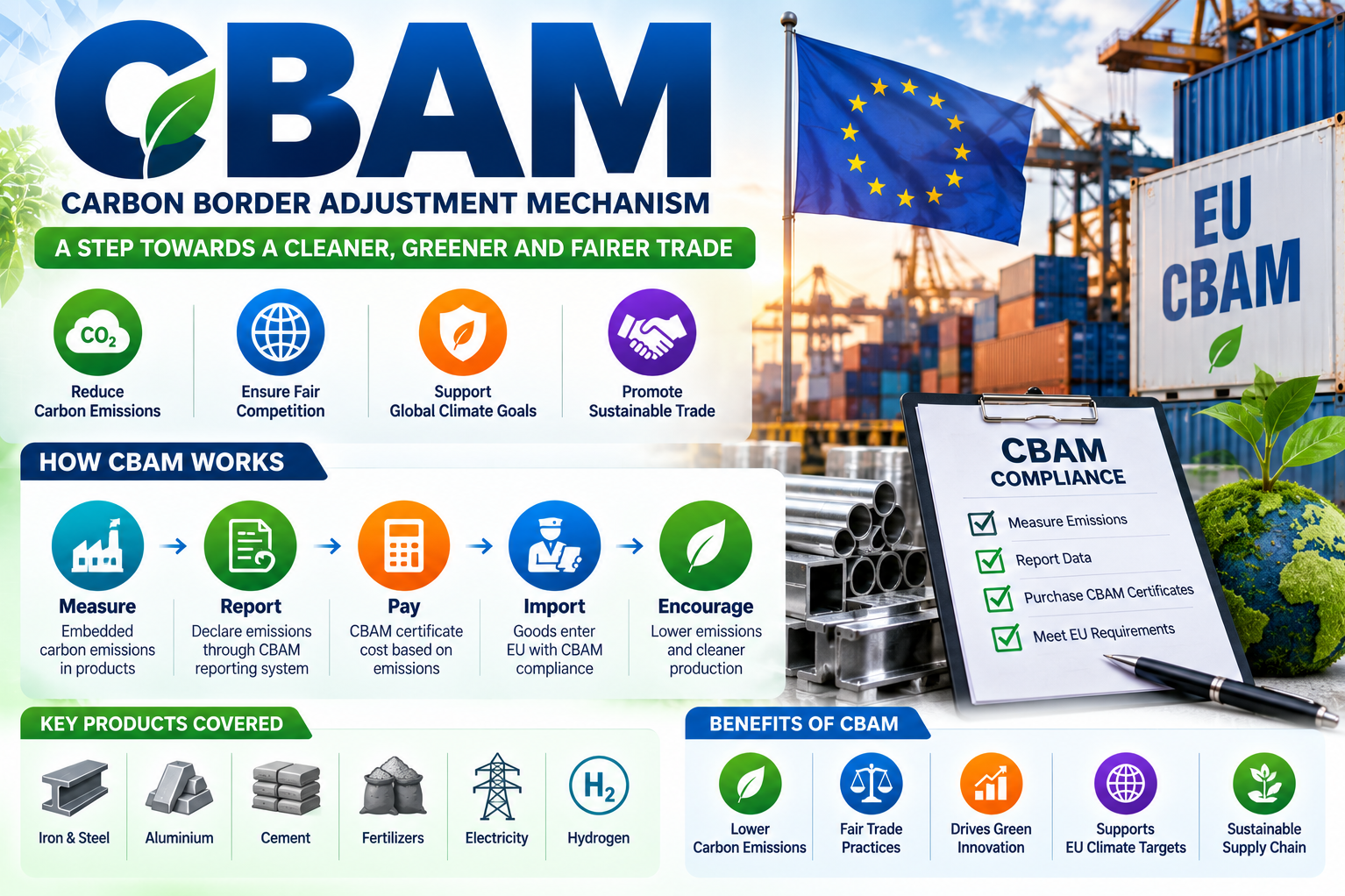
The EU's Carbon Border Adjustment Mechanism (CBAM) puts a carbon cost on certain goods imported into the European Union, equal to what an EU producer would have paid under the EU Emissions Trading System for the same emissions. The stated purpose is to stop 'carbon leakage': EU manufacturers moving production, or losing orders, to countries where carbon is not priced.
The mechanism works through the EU importer. For each tonne of CO₂ embedded in the goods they import, the importer must buy and surrender a CBAM certificate priced off the weekly EU ETS allowance price. The importer pays, but the number they pay for comes from the exporter's production data. That is why CBAM matters to a factory outside the EU that has never dealt with European regulation: your customer's cost now depends on numbers only you can provide.
CBAM has been in force since 2023. What changed on 1 January 2026 is that it stopped being a reporting exercise and started costing money.
Which goods are covered and who is affected
CBAM currently covers six sectors: cement, iron and steel, aluminium, fertilisers, electricity and hydrogen. Within those sectors the scope runs down the product chain, so it is not only raw steel but also many downstream iron, steel and aluminium products: fasteners, tubes, structures, wire, sheet and similar items, identified by customs (CN) code.
If you make anything from iron, steel or aluminium and sell it into the EU, assume you are affected until you have checked each product's CN code against Annex I of the CBAM Regulation. The most common mistake is assuming that a finished or fabricated product is out of scope because it isn't 'steel' in the commodity sense.
Since 1 January 2026 there is a size cut-off on the EU side. An importer who brings in no more than 50 tonnes net mass of CBAM goods in a calendar year, across all four of cement, iron and steel, fertilisers and aluminium combined, is exempt. The threshold does not apply to electricity or hydrogen. It is counted per importer, not per exporter or per shipment, so a small supplier to a large EU customer gets no relief from it (DEHSt, definitive regime from 2026).
Where things stand in October 2026
The transitional phase, in which importers only reported quarterly and paid nothing, ended on 31 December 2025. The definitive regime has applied since 1 January 2026. Most CBAM guides still online describe the transitional rules; check the date on anything you read.
The cost is phased in. In 2026 only 2.5% of embedded emissions attract a certificate obligation after the free-allocation adjustment; that rises each year until EU free allocation ends in 2034. An exporter who has not felt CBAM in their prices yet should not conclude it is small. It is small this year by design.
Still pending from the Commission as of this writing: the implementing act on deducting carbon prices paid outside the EU, and the revised benchmarks. Anything you read that states these as settled is ahead of the law.
What an exporter outside the EU actually has to provide
CBAM places no legal obligation on a non-EU producer. The pressure arrives commercially: your EU customer must declare the embedded emissions of what they bought from you, and they have two ways to get that number.
Option 1: default values. The Commission publishes default emission factors per product and country (Implementing Regulation (EU) 2025/2621). The importer can use these without any data from you. They are set conservatively, so an importer relying on them will typically surrender more certificates than one with verified real data. Over time, suppliers who can only offer defaults become the more expensive option.
Option 2: your actual data. If you monitor your installation's emissions using the prescribed methodology and have the figures verified by an accredited verifier, your customer can declare your actual embedded emissions instead. Your verification report travels with their declaration.
For a producer, Option 2 means being able to supply, per installation and per product:
- Direct emissions from the production process (fuel burned, process emissions), allocated to each CBAM product.
- Indirect emissions from purchased electricity, with the emission factor used.
- Production quantities over the same period, so the figure becomes tonnes of CO₂ per tonne of product.
- For products made from CBAM precursors you bought in (for example steel billets you roll into bar), the embedded emissions of those inputs from your own suppliers.
- Any carbon price you have actually paid at home, with evidence, since this can be deducted from what your customer owes once the implementing act is in force.
The Commission runs a voluntary platform (O3CI) through which non-EU operators can submit installation data once and have it reused by multiple EU importers, rather than answering each customer's spreadsheet separately.
The practical sequence is: confirm which of your products are in scope by CN code, identify which installations make them, set up emissions monitoring that follows the CBAM methodology, run one full reporting period, then get it verified. Starting from zero, that is six to twelve months of work before you have a verified number to give anyone.
Common mistakes exporters make
- Treating it as the customer's problem. Legally it is. Commercially, the supplier who cannot provide verified data is the one who gets dropped when the certificate cost becomes visible in 2027.
- Sending a corporate carbon footprint instead of CBAM data. A company-wide Scope 1 and 2 figure is not what the regulation asks for. CBAM wants emissions per installation, allocated per product, by the prescribed method. A sustainability report does not substitute.
- Ignoring precursors. If you buy in CBAM goods and process them, their embedded emissions become part of yours. Many fabricators have no data from their own steel or aluminium suppliers and discover the gap late.
- Using the wrong period. The data has to cover a defined reporting period aligned to the calendar year the goods were imported. Figures from a one-off audit two years ago won't be accepted by a verifier.
- Waiting for the rules to settle. Parts of the regime are still being finalised, and that is a reason to start monitoring now, not to wait: the monitoring methodology is fixed, and verified data for 2026 is what your customer needs by September 2027.
- Guessing at scope from product names. Check CN codes line by line. 'Not in scope' is a conclusion you should be able to show on paper.
Where to start
If you export iron, steel, aluminium, cement or fertiliser products to the EU and cannot yet give a customer a verified embedded-emissions figure per product, the first step is a scope check: a list of your CN codes against Annex I, and a list of the installations behind them. That takes days, not months, and it tells you how big the job is.
Advice Consultancy helps type of business, e.g. manufacturers and exporters in EU get CBAM-ready: confirming product scope, setting up installation-level emissions monitoring to the CBAM methodology, preparing the data pack EU customers ask for, and getting it through verification.
To find out where your products stand, contact us through the form on our contact page / book a call via the link on our contact page.