


What 'EIL approved' means
Engineers India Limited is the Navratna engineering consultancy under India's Ministry of Petroleum and Natural Gas. It designs and manages most of the country's refinery, petrochemical, pipeline, fertiliser and strategic-storage projects, from IOCL and HPCL expansions to the Rajasthan Refinery and the Dangote complex in Nigeria. When EIL engineers a project, EIL also writes the vendor list the owner buys from.
An EIL enlistment is a place on that list. It is not a product certificate. It is EIL's statement that your factory, at the address named, has been assessed as capable of supplying a defined range of items, in defined sizes, ratings and materials, to EIL's specifications. The enlistment letter spells out that scope, and anything outside it is as good as unlisted.
EIL's own figures put the network at roughly 2,700 enlisted suppliers, of which about 1,700 are Indian and around 700 are MSEs. That is a small club relative to the number of fabricators and machine shops in the country, which is the whole point of it.
The benefits, in order of how much they are worth
You can be invited to bid. This is the one that matters. On EIL-engineered projects, enquiries for engineered and critical items go to enlisted suppliers in that category. Without enlistment you are not in the bidders' list, however good your product. For a fabricator of pressure vessels, heat exchangers, valves, pumps, structural steel or piping components, the refinery and petrochemical sector is a large share of the addressable market in India, and EIL sits in front of most of it.
The approval travels. The enlistment covers EIL's own projects, but the refining PSUs, EPC contractors and private owners who work with EIL routinely accept EIL enlistment as proof of capability, often in place of their own assessment. An EIL-approved vendor list is the default starting point for many Indian EPCs when they build a bid.
Three years of standing. Enlistment is valid for three years, with a system reminder six months before expiry and a revalidation route that is lighter than the first application. Enhancement applications let you add sizes, ratings, materials or new items under the same works, or add a second factory, without starting over.
Your own quality system gets a hard external test. EIL's capability assessment looks at the shop, the people, the equipment and the records against the kind of items you want to supply. Suppliers who come out of it typically have tightened their welding qualification, NDT, calibration and material traceability whether or not they wanted to.
Preferential treatment if you are an MSE. Concessional processing charges and the purchase preference that public procurement rules give to micro and small enterprises apply, and EIL runs targeted indigenisation lists for items it wants to source locally.
Credibility beyond oil and gas. An EIL enlistment letter on a company profile is read by Indian industrial buyers in power, fertiliser, steel and infrastructure as evidence that a serious assessor has been through the plant.
What EIL checks
The assessment is of capability to make the item, not of paperwork for its own sake. Expect scrutiny of:
- Legal and financial standing: incorporation, GST, PAN, audited accounts for the last three years, and turnover against the size of orders you are asking to be considered for.
- Past supply record: purchase orders and completion or performance certificates for the same or similar items, ideally from refineries, petrochemical plants, PSUs or reputed EPCs. This is weighted heavily; a plant with no track record in the item is usually asked to come back after it has one.
- Manufacturing facility: owned or long-leased works, with the plant and machinery that the item range needs, covered area, lifting capacity and shop loading. EIL asks for shop loading as a number, how much of your capacity is already committed, because it wants to know you can take their orders.
- Quality system: ISO 9001 at a minimum; ISO 45001 is encouraged and reported but not mandatory. For pressure parts, ASME U-stamp, IBR approval or PED carries real weight. The QC organisation, inspection and test equipment, calibration and NDT arrangements are checked.
- People: qualified engineers, certified welders, and NDT personnel for the processes the item needs.
- Design capability, where the item is engineered rather than catalogue: design software, codes used, and reference designs.
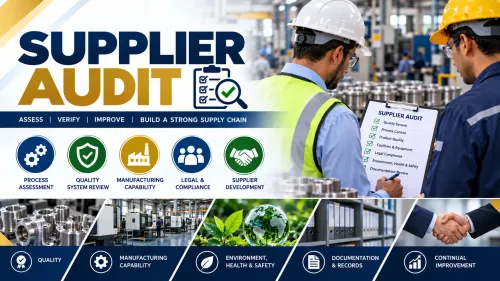
Where the documents pass, EIL's inspection arm visits the works for a capability assessment before the enlistment committee decides. The assessor compares what the application claimed with what is on the shop floor.
How the process runs
- Read the Terms and Conditions first. EIL publishes a Terms and Conditions document for supplier enlistment on its portal and says plainly that applications not following it are rejected. Most rejections trace back to someone skipping this step.
- Apply online through the enlistment portal at enlist.eil.co.in, choosing the item codes you want from EIL's item list and uploading the documents against each.
- Pay the processing fee. Supplier enlistment carries a fee, exclusive of GST, with concessional charges for MSEs. Contractor enlistment is free.
- Document scrutiny. EIL reviews the application and raises queries through the portal. Answer them completely and once; a half-answered query goes to the back of the queue.
- Capability assessment at the works. EIL's inspectors visit, verify the facility and records, and may ask to see an item of the type applied for in production.
- Committee approval and enlistment letter, naming the works, the items, and the sizes, ratings and materials covered.
Validity is three years. Revalidation and enhancement are separate applications, filed one after the other, not together. Allow several months end to end; the capability visit is the gating step and depends on EIL's inspection schedule, not yours.
What it does not do
This is where the sales pitch and the reality part ways.
It does not bring orders. Enlistment puts you on the list of who gets the enquiry. The order still goes to the lowest technically acceptable bidder, and on PSU projects that is a price fight. Plenty of enlisted suppliers have never won an EIL job.
It is not a certificate of product conformity. No item leaves your shop 'EIL certified'. Every order still carries its own inspection and test plan, third-party inspection and release. Buyers who confuse the two will be disappointed, and so will you if you quote it that way.
It is narrow. The letter covers one works and a defined item range. A new product line, a bigger size, a new material grade or a second factory each needs an enhancement application and may need another assessment visit.
It can be lost. EIL maintains a suspension and banning procedure and publishes the list of suspended agencies. Poor performance on an order, false documents in the application, or a quality failure in the field can end the enlistment before its three years run.
It is not accepted everywhere. Private refiners, foreign licensors and overseas EPCs run their own qualification. EIL enlistment helps the conversation; it does not end it.
Who should pursue it
Any Indian manufacturer whose product appears on EIL's item list and who already has one or two supplies to a refinery, petrochemical plant or their EPC behind them. For that company, enlistment is the difference between being in the enquiry and reading about the project in the newspaper.
A company with no track record in the item should build one first, through an EPC's sub-order or a smaller owner, and apply when there is a performance certificate to attach. A company whose customers are automotive, general engineering or export will get an expensive audit and a letter nobody asks for.
If you are in the first group, read the Terms and Conditions, get your shop-floor records to the standard an EIL inspector will expect, and apply for a narrow, defensible scope you can enhance later. A rejected wide application costs more time than two approved narrow ones.